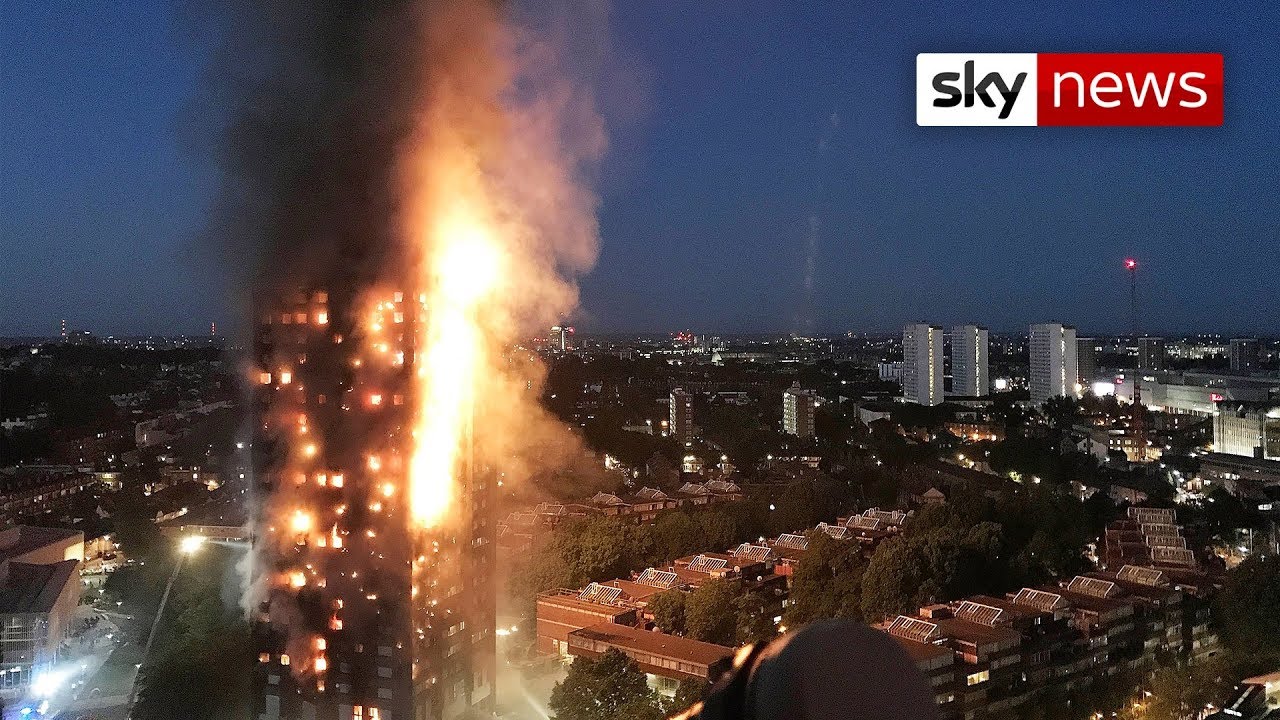
What caused the Grenfell fire to spread so quickly?
The most significant part of the renovation of Grenfell Tower was the addition of external cladding. This consisted of aluminium sheets bonded to a central plastic (polyethylene) core.

In his report to the public inquiry, Professor Luke Bisby said evidence "strongly supports" the theory that the polyethylene material in the cladding was the primary cause of the fire's spread.
"The ACM (aluminium composite material) product on Grenfell Tower incorporates a highly combustible polyethylene polymer filler which melts, drips, and flows at elevated temperature. The polyethylene filler material is expected to release large amounts of energy during combustion".
His report also suggests that vertical cavities within the cladding structure played a role in the spread of the fire, as did the insulation, although evidence was inconclusive.
A number of other flammable materials, including a polyurethane polymer foam insulation board which pre-dated the refurbishment were also present and may have contributed, Prof. Bisby found.
In her report, fire expert Dr Barbara Lane identifies combustible materials used in the refurbishment of the tower's windows as another factor in allowing the fire to spread.
The Grenfell Inquiry has also heard that the building's smoke extraction system was not working, and that firefighters experienced problems with the water supply because there was no 'wet riser' - a water-filled pipe running up the building to be used in the event of fire.
Giving evidence to the inquiry, Dr Lane said exposed gas pipes installed in 2016 were another contributory factor, while none of the flat doors met current fire resistance standards.
Work done on the lifts in 2005 and 2012-16 left them unfit for evacuating vulnerable residents and aiding the emergency response, Dr Lane said.
What kind of building was Grenfell Tower?
Grenfell Tower was part of the Lancaster West Estate, a social housing complex of almost 1,000 homes.
The tower was built in the 1970s, but recently renovated.
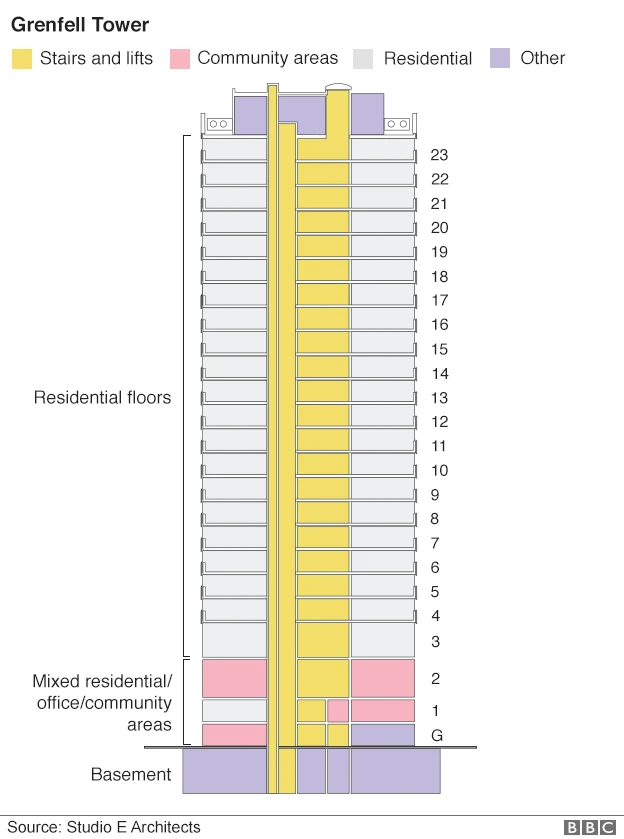
An £8.6m refurbishment - part of a wider transformation of the estate - was completed by Rydon Construction in May 2016.
Work included new exterior cladding, replacement windows and a communal heating system.
The bottom four floors were also remodelled, creating seven additional homes and improvements to communal facilities.
How is the fire and its causes being investigated?
After the fire a massive search and recovery operation led by the Met, City of London and British Transport Police began immediately.
Specially trained officers thoroughly searched every single flat, examining some 15.5 tonnes of debris on each floor, helped by forensic anthropologists, archaeologists and forensic dentists or odontologists.
The Met Police are looking into offences including manslaughter, corporate manslaughter, misconduct in public office and breaches of fire safety regulations in relation to the fire.
The force has already gathered 31 million documents and 2,500 physical exhibits. Some 1,144 witnesses have given statements and 383 companies are part of the investigation. Lawyers representing survivors and relatives of the victims began giving evidence in December 2017.
Phase one of the inquiry, which examined what happened on the night, was released in October 2019 and found 'systemic failures' in London Fire Brigade's response.
Phase two, which will look at the building's refurbishment and external cladding, is due to begin in January 2020.
What's Your Reaction?